Should I Paint or Stain My Deck? A Connecticut Homeowner's Guide
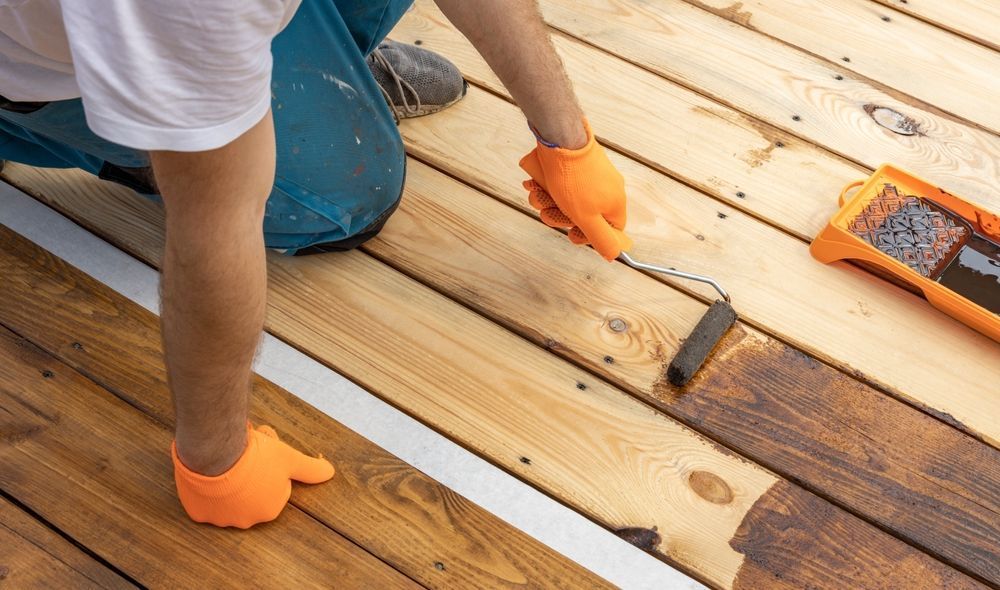
If you're planning to update your deck, one of the biggest decisions you'll face is:
Should I paint it or stain it?
While both options can improve the appearance of your deck, they perform very differently and are designed for different situations.
The right choice depends on the age and condition of your deck, your maintenance expectations, and the overall look you're trying to achieve.
Let's break down the pros and cons of each.
What's the Difference Between Paint and Stain?
Although they may look similar from a distance, paint and stain work differently.
Paint
Paint creates a protective film on top of the wood. It provides:
Complete color coverage
A uniform appearance
Strong UV protection
Because it sits on top of the surface, paint completely hides the natural grain and character of the wood.
Stain
Stain is designed to penetrate or bond differently to the wood while allowing some of the wood's texture and character to remain visible.
Depending on the transparency selected, stain can provide:
- Natural appearance
- Visible wood grain
- More forgiving aging characteristics
Most deck-specific coatings used today are stain systems rather than traditional exterior paints.
Why Most Decks Are Stained Instead of Painted
For the majority of Connecticut decks, stain is typically the preferred option. Why?
Because decks experience constant:
- Foot traffic
- Snow and ice
- Moisture exposure
- Expansion and contraction
These conditions are extremely demanding on coatings.
Stains generally perform better under these conditions because they are often more forgiving as they weather and age.
Benefits of Staining a Deck
More Natural Appearance
Stain allows the beauty of the wood to remain visible. This is especially attractive on:
- Cedar decks
- Mahogany decks
- Newer pressure-treated lumber
Easier Maintenance
As stain begins to wear, it typically fades gradually. Maintenance often involves:
- Cleaning
- Light preparation
- Recoating
Better for Aging Decks
Many older decks contain:
- Replacement boards
- Repairs
- Weathering
Semi-solid and solid stains can help provide a more consistent appearance while remaining easier to maintain than paint.
Benefits of Painting a Deck
There are situations where paint can make sense.
Complete Color Change
Paint provides full coverage and allows for dramatic color transformations.
Uniform Appearance
Paint can hide:
- Color variation
- Staining
- Certain cosmetic imperfections
Existing Painted Decks
If a deck has already been painted multiple times, continuing with a paint system may be the most practical approach.
The Downsides of Painting a Deck
This is where many homeowners get surprised.
Because paint creates a film on top of the surface, it can be more susceptible to:
- Peeling
- Chipping
- Flaking
Especially in Connecticut's climate.
Once paint begins to fail, repairs often require significantly more preparation.
The Downsides of Staining a Deck
Stain isn't perfect either. More transparent stains may:
- Require more frequent maintenance
- Show imperfections in the wood
- Reveal differences between old and new boards
The tradeoff is often worth it for homeowners who prefer a natural appearance.
What We Recommend Most Often
At Brothers & Brushes Painting, we typically recommend stain systems for the majority of deck projects.
The specific type of stain depends on:
- The age of the deck
- Previous coatings
- Wood condition
- Desired appearance
For newer decks, semi-transparent stains are often an excellent choice.
For older decks with repairs or weathering, semi-solid or solid stains frequently provide the best balance of appearance and durability.
When Paint Might Be the Better Choice
Paint may make sense if:
- The deck has already been painted
- The surface has extensive cosmetic issues
- A completely uniform appearance is the primary goal
Even then, proper preparation is critical.
Questions to Ask Before Choosing
Before deciding between paint and stain, ask yourself:
Do I want to see the wood grain?
- How much maintenance am I willing to perform?
- Is my deck new or older?
- Has it been painted or stained previously?
- Am I prioritizing appearance or long-term maintenance?
The answers will often point you toward the right system.
Final Thoughts
For most Connecticut homeowners, stain is the preferred choice because it offers a more natural appearance and is generally easier to maintain over time.
However, every deck is different.
The best solution depends on the condition of the wood, the existing coating, and your long-term goals.
A product that works perfectly on one deck may not be the right choice for another.
Thinking About Updating Your Deck?
At Brothers & Brushes Painting, we help Connecticut homeowners evaluate their decks, understand their options, and select the right coating system for long-term performance.
Whether you're considering paint, stain, or a complete deck restoration, we'd be happy to help you make the right decision.